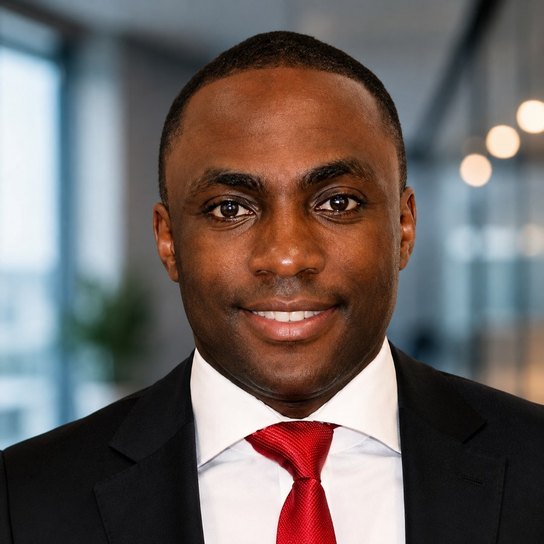
Liorry Herisnor

Liorry Herisnor

Product and Technical Program Manager specializing in AI, automation, and digital platforms

I lead technology and automation initiatives from initial requirements through development, testing, launch, and ongoing improvement.

Product Management • Program Delivery • AI and Automation • Product Operations

Open to: Product Manager · Program Manager · Technical Program Manager · Product Operations Manager · AI Product Manager

Portrait of Liorry Herisnor

Capabilities

What I manage and deliver

Product definition, program delivery, and the decisions about where automation belongs. Every project on this site is some combination of the three.

  • Product Management

    I find where a business is actually losing time, money or accuracy, then write requirements clear enough for a developer to build from and a tester to verify against.

    • Discovery
    • Product requirements
    • PRDs
    • Roadmaps
    • Prioritization
    • User stories
    • Acceptance criteria
    • Product metrics
    • Launch planning
  • Program Delivery

    I plan the workstreams, keep dependencies and risks visible, run testing through to sign-off, and get releases to a decision the business can approve.

    • Workstream planning
    • Timelines
    • Dependencies
    • Risks
    • Budgets
    • Vendors
    • Stakeholder alignment
    • SIT and UAT
    • Defect management
    • Release coordination
  • AI and Automation

    I decide where AI genuinely helps, where it does not belong, and which approvals and business rules have to stay in reliable software rather than depending on someone remembering them.

    • AI-assisted workflows
    • Process automation
    • Human approval steps
    • Permission and approval controls
    • Audit trails
    • System monitoring
    • Business rules
    • Responsible AI boundaries

Where I use AI, and where I do not

I use AI to improve analysis, recommendations and productivity, while keeping approvals, permissions and critical business rules inside reliable software workflows. High-impact actions require a person to approve them.

Where exactly that line falls is a decision made per project, and each case study states the boundary it actually uses.

Case studies

The business problem, my role, what made it difficult, what was delivered, and what changed. Each links to the full write-up, including the decisions and the parts that did not work.

View All Case Studies
  • Status: ProductionMarketing and Growth · 2023 — present

    AI-Powered Business Operations Platform

    Business problem
    An agency running on a handful of repeated workflows — qualify an inquiry, produce content, produce creative, report — each performed by hand, each as slow as whoever was free.
    My role
    Founder, product owner and operations lead — vision, requirements, prioritization, delivery coordination and day-to-day operation.
    Product / program challenge
    Automating production steps without automating client relationships, in a business where a wrong commitment costs the account.
    Solution
    An operating model where AI handles intake acknowledgment, drafting and creative production, with fixed rules for routing and scoring, and a person accountable for every client commitment.
    Outcome
    170+ clients served, 70% fewer manual workflows, 40% faster project turnaround, 45% lower creative production cost, first qualified response under two minutes.

    Read the case study

  • Status: ShippedEnterprise Experience · 2011 — 2015

    Enterprise Technology Programs in Financial Services

    Business problem
    Large financial institutions cannot ship a change on confidence. Requirements have to be agreed, testing coordinated, defects resolved and retested, and the business outcome confirmed before release.
    My role
    Business analyst and delivery consultant across four institutions — requirements, testing coordination, defect management and business validation.
    Product / program challenge
    Aligning operations and technology teams who disagreed, then holding the delivery to evidence rather than to opinion.
    Solution
    One repeatable sequence — map the process, document requirements, plan and coordinate SIT and UAT, drive defects to closure and retest, validate the outcome, support a controlled release.
    Outcome
    Supported discovery on a $45m program, analytics reaching 17,000+ advisors, and Loan IQ and back-office delivery across the loan-servicing lifecycle.

    Read the case study

  • Status: Live internal toolProduct Delivery · 2025 — present

    Using AI to Improve Product Development

    Business problem
    One person owning the platform, the infrastructure, the data pipelines and the agent systems at once — where the real limit is holding quality and safety steady as the scope grows.
    My role
    Author and owner of the development process used across every project in this portfolio.
    Product / program challenge
    Using AI heavily without letting it make decisions nobody can be held to — and being able to show that to whoever is responsible for the systems.
    Solution
    A written operating manual per repository, curated requirement packs, scoped task cards, model selection by task type, automated pre-commit checks with no AI in the loop, and human approval on every production change.
    Outcome
    50% faster from written requirement to tested production release, with no production change ever applied by AI alone.

    Read the case study

  • Status: ProductionPlatforms · 2025 — present

    Modernizing a Legacy Marketing Platform

    Business problem
    A campaign operation that worked until it quietly stopped being correct — compliance checks duplicated across send paths, delivery problems escalating faster than anyone noticed, and interrupted sends resolved by an operator's judgment call.
    My role
    Product owner and program lead — vision, requirements, architecture decisions, delivery coordination, testing, release planning and production operations.
    Product / program challenge
    Modernizing a live revenue system without a hard cutover, with no permanent engineering team, and making the compliance rules impossible to bypass rather than merely documented.
    Solution
    One unsubscribe and bounce check that every send passes through, a barrier that blocks a send until its readiness checks complete, automatic delivery protection, recovery that resumes an interrupted send from its own records, and every change behind a switch that is off by default.
    Outcome
    Compliance built into the process, delivery incidents handled without waiting for someone to notice, interrupted sends resumed automatically, and 50% faster requirement-to-production cycles.

    Read the case study

Enterprise experience

Delivery experience in large financial institutions

Four years of consulting inside large financial institutions: an approximately $45 million technology program, an analytics platform used by more than 17,000 financial advisors, Loan IQ and back-office delivery, and high-volume financial operations.

  • Moody's

    Discovery and requirements on a $45m technology program

  • Morgan Stanley

    Analytics delivery for 17,000+ financial advisors

  • Credit Suisse

    Loan IQ and back-office delivery, requirements, SIT and UAT

  • Société Générale

    High-volume financial operations and trade investigations

Consultant engagements between 2011 and 2015. Full detail on the enterprise case study and the experience page.

Artifacts

The deliverables, not just the outcomes

Twenty product and program documents — PRDs, roadmaps, UAT plans, RAID logs, defect reports and release checklists. Each one says whether it is a sanitized working document of mine or a reconstruction of a format used at a former employer.

  • Product

    One-page PRD

    Whether the problem is worth solving, and what would count as having solved it.

    Sanitized actual artifact · MailerClub — suppression enforcement

    View this artifact

  • Program

    UAT plan

    Whether the business accepts the change, and whether the release can proceed.

    Representative reconstruction · Credit Suisse — Loan IQ and back-office delivery

    View this artifact

  • Program

    RAID log

    Which risks are being actively managed, and which are knowingly accepted.

    Sanitized actual artifact · Platform modernization

    View this artifact

How I work

Seven steps, in this order, every time

The sequence is the same whether the work is a client intake process or a purpose-built delivery engine. What changes is how much of each step the situation needs.

  1. Start with the business problem

    Map the operation as it runs today and find where time, money and accuracy are actually lost, before anything is designed.

  2. Define measurable outcomes

    Agree what would count as success, and how it will be measured, while the work can still be shaped by the answer.

  3. Write clear requirements

    Goals, explicit non-goals, user stories and acceptance criteria — written so a developer and a tester read the same thing.

  4. Decide where AI belongs

    Set out what AI will help with and what stays under defined business rules and approvals, then build the system so that split holds.

  5. Validate through testing

    Integration and user acceptance testing, defects tracked to closure and retested, and a business owner confirming the outcome.

  6. Launch with monitoring in place

    Release with the new behavior switched off by default, with the reporting needed to tell whether the change is actually working once it is on.

  7. Improve from what production shows

    Turn each incident into a rule, a check or a runbook, so a fix that helped once helps the whole team afterwards.

Looking for a product or program manager who can take an AI or automation initiative from requirements through testing to a working system?

I am open to product, program, technical program and product operations roles, and to selected consulting work. The quickest way to judge the fit is the portfolio overview.